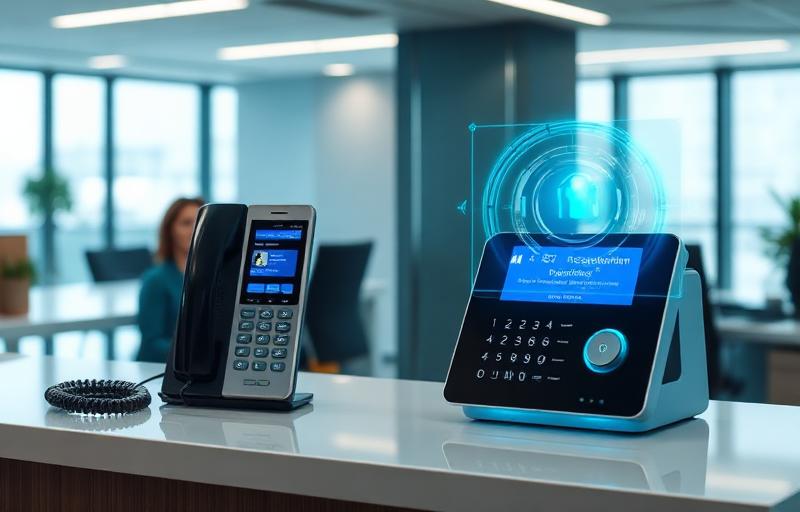
AI Virtual Receptionist vs. Traditional Answering Services: A Guide for UK SMEs
Every missed call is a missed opportunity. For UK SMEs, the question is no longer whether to answer every call - it's how. Traditional answering services have been the default for decades, but AI virtual receptionists now offer a credible, often superior, alternative. This guide compares the two head-to-head so you can make an evidence-based decision.
What We Mean by Each Option
Traditional answering services use human agents - either an in-house receptionist or an outsourced call-handling team - to answer, screen, and route your calls. You pay for people's time, usually per minute, per call, or via a monthly retainer.
AI virtual receptionists use conversational AI to answer calls, understand caller intent, answer common questions, capture details, book appointments, and route or escalate when needed. They run around the clock and scale instantly with call volume.
Both aim to ensure no caller is left unanswered. The difference is in cost, consistency, availability, and how well they connect to the rest of your business.
Cost-Per-Call: The Numbers That Matter
For most SMEs, cost is the first consideration - and it is where the gap is widest.
Traditional services typically charge per call or per minute. A single answered call can cost anywhere from 80p to over £2 once you account for connection fees and minimum charges. During busy periods, costs scale linearly: double the calls, double the bill. Out-of-hours and overflow cover usually carries a premium.
AI virtual receptionists carry a predictable monthly cost regardless of call volume spikes. Because there is no per-agent overhead, the effective cost-per-call falls as volume rises. For a business handling hundreds of calls a month, the saving is often substantial - and the cost stays flat whether you take 50 calls or 500.
The practical takeaway: if your call volume is variable or growing, AI removes the cost uncertainty that comes with per-call human pricing.
24/7 Reliability and Consistency
Human services are limited by staffing. Genuine 24/7 cover means paying for night shifts, weekends, and holiday cover, and quality can vary between agents and across shifts. Sickness, peak-time queues, and call abandonment are real risks.
AI virtual receptionists answer every call instantly, at any hour, with the same quality every time. There is no queue, no hold music, and no abandoned calls during a rush. For sectors where after-hours enquiries convert - property, healthcare, trades, professional services - always-on answering directly protects revenue.
This does not mean humans have no place. Complex, sensitive, or high-value conversations still benefit from a person. The strongest setups use AI to handle the high volume of routine calls and escalate the exceptions to a human.
CRM Integration: Where AI Pulls Ahead
A traditional service can take a message. An AI virtual receptionist can take a message, log the caller, create or update a contact record, book the appointment, and trigger a follow-up - automatically.
Because AI receptionists are software, they integrate directly with your CRM, calendar, and helpdesk. That means:
- Caller details captured and written to your CRM in real time
- Appointments booked straight into your calendar
- Lead data routed to the right team instantly
- A searchable record of every interaction, with no manual transcription
With a human answering service, that data usually arrives later as an email or a daily summary, requiring someone on your side to re-key it. The integration gap is one of the biggest hidden costs of traditional services.
Side-by-Side Comparison
| Factor | Traditional Answering Service | AI Virtual Receptionist | | --- | --- | --- | | Cost model | Per call / per minute | Predictable monthly fee | | Cost at high volume | Scales up linearly | Stays flat | | Availability | Limited by staffing | True 24/7 | | Consistency | Varies by agent | Identical every call | | CRM integration | Manual, delayed | Automatic, real-time | | Handling complex calls | Strong | Escalates to human | | Scaling with spikes | Queues and overflow fees | Instant |
When Switching Makes Sense
You are a strong candidate to switch from a human answering service to AI if:
- Your call volume is variable or growing and per-call costs are unpredictable
- You are missing out-of-hours or overflow calls
- Your team spends time re-keying caller details into your CRM
- A large share of your calls are routine - bookings, FAQs, qualifying enquiries
- You want every caller answered immediately, every time
If most of your calls are highly complex or emotionally sensitive, a hybrid model - AI for volume, humans for exceptions - is usually the right answer rather than a full switch.
Making the Move Without Disruption
Switching does not have to be all-or-nothing. The lowest-risk approach is to start AI on overflow and out-of-hours calls, measure the results, then expand coverage as confidence grows. Map your most common call types first, connect the AI to your CRM and calendar, and define clear escalation rules for when a human should take over.
The Bottom Line
For most UK SMEs, AI virtual receptionists win on cost predictability, 24/7 reliability, and CRM integration, while human services retain an edge on the most complex conversations. The smartest strategy is rarely either/or - it is using AI to answer everything instantly and escalating the calls that genuinely need a person.
Not sure where your business sits? Our free AI Readiness Check gives you a personalised view of where AI call handling could save money and capture more leads - in under two minutes.
Want Personalised AI Advice?
Take our free 2-minute AI Readiness Check for recommendations tailored to your business.
Start AI Readiness Check